Bright-red blood or anal pain is not always caused by piles, and waiting for repeated episodes can delay treatment for an abscess, fissure or bowel disease. Use the urgency guide below to decide whether you need emergency care, a same-day assessment or a routine consultation, then prepare the information a doctor needs to identify the cause.
Key takeaways
- Seek emergency care for heavy bleeding, fainting, confusion or severe weakness.
- Question piles when pain is severe, persistent, or paired with unusual swelling.
- Book a consultation when symptoms recur, change, or resist sensible home care.
- Expect questions, an examination, and tests when another cause needs checking.
Start with the urgency: emergency, same-day care or a routine visit?
Go to an emergency department now for heavy rectal bleeding or continuous bleeding, especially with dizziness, fainting, confusion, rapid breathing, a fast heartbeat, or severe weakness. These signs can indicate significant blood loss or shock, not uncomplicated piles.
- Emergency care: black tarry stool, maroon blood in stool, blood filling the toilet, clots, or bleeding that does not slow after several minutes of gentle pressure.
- Same-day medical care: bleeding with fever, pus, worsening swelling, severe anal pain, abdominal pain, vomiting, or feeling unusually unwell. Contact a clinician promptly if you take warfarin, apixaban, rivaroxaban, aspirin, or another blood thinner.
- Routine consultation: a small, one-off amount of bright-red blood after straining, with no dizziness or severe pain, can usually be assessed by booking a standard appointment. Book sooner if it recurs, increases, appears without straining, or continues after several days of constipation care.
Do not assume every red smear is piles. A sharp, tearing pain during bowel movements that lasts afterward points more toward an anal fissure, while bleeding with altered bowel habits, weight loss, iron-deficiency anaemia, a mass, or unexplained recurrence needs assessment for bowel disease.
Dark stool can come from bleeding higher in the digestive tract, so a rectal examination alone may not explain it.
Use pain, bleeding and swelling patterns to question the piles assumption
Pain, bleeding and swelling patterns can point away from piles. Location, timing and appearance offer clues, but recurrent or unexplained bleeding still needs examination.
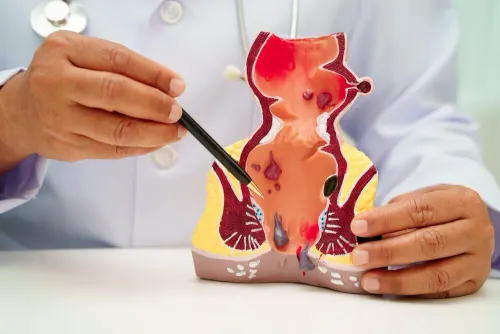
- Internal hemorrhoids often cause painless, bright-red blood on toilet paper or coating the stool. A feeling of fullness, prolapse or mucus supports this pattern more than severe pain.
- An anal fissure causes sharp or tearing pain during a bowel movement that continues for minutes or hours afterward. A small streak of bright-red blood on the paper or stool surface is common.
- An external thrombosed hemorrhoid produces sudden, severe pain and a firm blue or purple lump at the anal edge. Pain is often worst during the first 48–72 hours.
- A perianal abscess causes constant, worsening pain with a tender, hot or swollen area. Fever, pus or difficulty sitting points to infection rather than uncomplicated hemorrhoids.
- An anal fistula often leaves a small external opening that repeatedly drains pus or blood, closes briefly, then swells again. Creams and antibiotics alone do not reliably close the tract.
- Rectal inflammation, polyps, inflammatory bowel disease or colorectal cancer can also cause bleeding, especially when it recurs without straining or accompanies diarrhoea, constipation, abdominal pain or weight loss. Maroon blood or black, tarry stool suggests bleeding beyond the anus.
Fiber, fluids and avoiding straining can help uncomplicated hemorrhoid symptoms, but they will not treat an abscess, fistula or another bowel condition. Persistent bleeding after sensible home care warrants reassessment rather than repeated piles treatment.
Book a consultation when symptoms recur, change or ignore sensible home care
A planned appointment is justified when bleeding or pain returns, changes pattern, or continues after sensible constipation care. Recurrent rectal bleeding deserves assessment even if the blood is bright red and the discomfort is mild.
Book a consultation if you notice any of these patterns:
- Bleeding without straining, bleeding that is increasing, or blood appearing on several separate occasions
- Pain, itching, swelling or a lump that persists after several days of increased fibre, adequate fluids, less toilet sitting and no straining
- Bleeding while taking anticoagulants such as apixaban, rivaroxaban or warfarin
- A change in bowel habits, including new constipation, diarrhoea, narrower stools or alternating constipation and diarrhoea
- Unexplained weight loss, unusual tiredness or known iron-deficiency anaemia
- Symptoms that begin after age 45 when you have not had recent colorectal evaluation, or a family history of bowel cancer or polyps
| Pattern | Why a planned consultation matters | What may be needed |
|---|---|---|
| Recurrent bright-red bleeding | Piles are possible, but fissures, inflammation, polyps and other causes can look similar | Anal examination and anoscopy |
| Bleeding with changed bowel habits | The source may be higher in the bowel rather than at the anus | Stool testing, sigmoidoscopy or colonoscopy |
| Persistent symptoms despite constipation care | Repeating home treatment can delay diagnosis of a fissure, abscess or fistula | Examination and treatment matched to the cause |
Know what the doctor will ask, examine and possibly test
Before the appointment, record the bleeding colour and amount, whether it coats the paper or drips into the bowl, when it occurs, and how long the pain lasts. Bring a list of medicines, especially anticoagulants, and note constipation, diarrhoea, weight loss, bowel-habit changes, family history of bowel disease, and any previous colorectal tests.
1. The doctor will ask when symptoms began, whether they recur, what triggers pain, and what home care you tried. Describe sharp pain during bowel movements, constant throbbing pain, swelling, fever, pus, or bleeding without straining accurately.
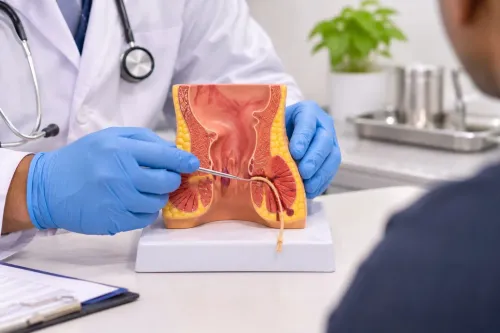
2. Expect an inspection of the skin around the anus for a fissure, clot, swelling, drainage or external haemorrhoid. Tell the doctor if an area is too painful to touch; severe tenderness can point to an abscess.
3. A digital rectal examination uses a gloved, lubricated finger to assess the anal canal and lower rectum. It can feel some lumps, tenderness or abnormal narrowing, but it cannot inspect the entire colon.
4. The clinician may use anoscopy, a short lighted instrument, to view the anal canal and lower rectum. Ask what the examination found and whether the bleeding source was actually seen.
A stool test, flexible sigmoidoscopy or colonoscopy may be appropriate when bleeding is recurrent, unexplained, changing, or accompanied by bowel-habit changes, family history, or age-related screening needs. Bright-red blood does not prove piles, and black, tarry stool needs prompt medical assessment.
Match the diagnosis to the right treatment decision in Porur
A specialist consultation prevents you from repeating a treatment that does not fit the diagnosis or anatomy. The key question is not “Which piles treatment should I repeat?” but “What is causing the pain, bleeding or discharge?”
- Confirmed grade I or II internal hemorrhoids may respond to fiber, fluids and less straining; rubber-band ligation suits selected internal hemorrhoids, not external hemorrhoids, fissures or fistulas. Persistent symptoms require a new examination, not endless repeat banding.
- A fissure needs a fissure-focused plan. Repeating piles creams or procedures will not repair a tear that causes sharp pain during and after bowel movements.
- Fever, increasing swelling, severe tenderness or pus requires assessment for an abscess. Antibiotics alone do not reliably treat a collection that needs drainage.
- An opening that drains pus or blood, closes briefly and swells again suggests fistula-in-ano. The doctor must trace its relationship to the sphincter before choosing treatment; Kshara Sutra is a seton-like option for selected cases, with repeated wound care, not a general piles remedy.
- Complex, high or recurrent fistulas may need MRI and a sphincter-sparing treatment to balance healing against continence risk.
At Dr.Dhananjayas Hospitals in Porur, ask which finding confirms the diagnosis, why the proposed treatment fits it, and what would trigger reassessment. This discussion helps prevent treating recurrent bleeding as piles when it needs evaluation for another bowel condition.
Frequently asked questions
When should rectal bleeding from suspected piles be treated as an emergency?
Go to an emergency department for heavy or continuous bleeding, especially with dizziness, fainting, confusion, rapid breathing, a fast heartbeat, or severe weakness.
Which pain, bleeding and swelling patterns can point to something other than piles?
Severe or persistent pain, sudden swelling, recurrent symptoms, changed bleeding, or symptoms that do not follow your usual pattern deserve medical assessment rather than an automatic piles diagnosis.
When should you book a routine piles consultation in Porur?
Book a consultation when symptoms recur, change, or continue after sensible home care, including improved hydration, fibre intake and avoiding straining.
What happens during a consultation for pain or bleeding?
The doctor will ask about bleeding, bowel habits, pain, swelling, medicines and medical history, then examine the area. Tests may be suggested when the findings require another cause to be ruled out.
How does the diagnosis affect piles treatment?
Treatment depends on the confirmed cause and severity. Options can include bowel-habit changes, medicines, procedures, or specialist care for conditions such as fissure or fistula.