An anal fistula is a tunnel between the anal canal and the skin, and treating the visible opening alone can leave the underlying problem active. By the end, you will know how clinicians map the tract, when Kshara Sutra may suit its anatomy, what repeated treatment involves, and which questions to ask before choosing care in Poonamallee.
Key takeaways
- Confirm the internal opening and tract before choosing treatment.
- Complex, branching, high or recurrent fistulas need careful suitability assessment.
- Expect planned thread changes, drainage, and follow-up during treatment.
- Keep the area clean, manage bowel movements, and report worsening pain or fever.
How an Anal Fistula Is Confirmed Before Treatment
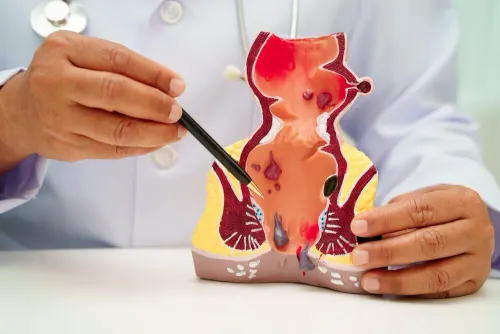
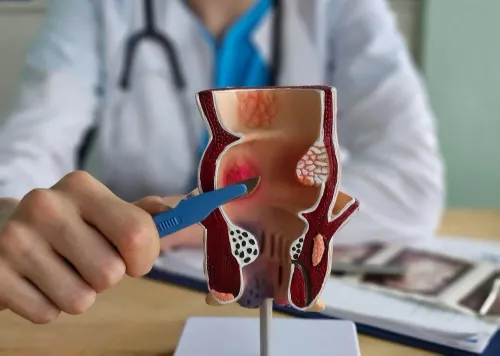
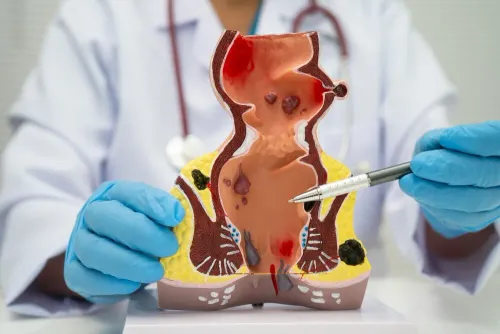
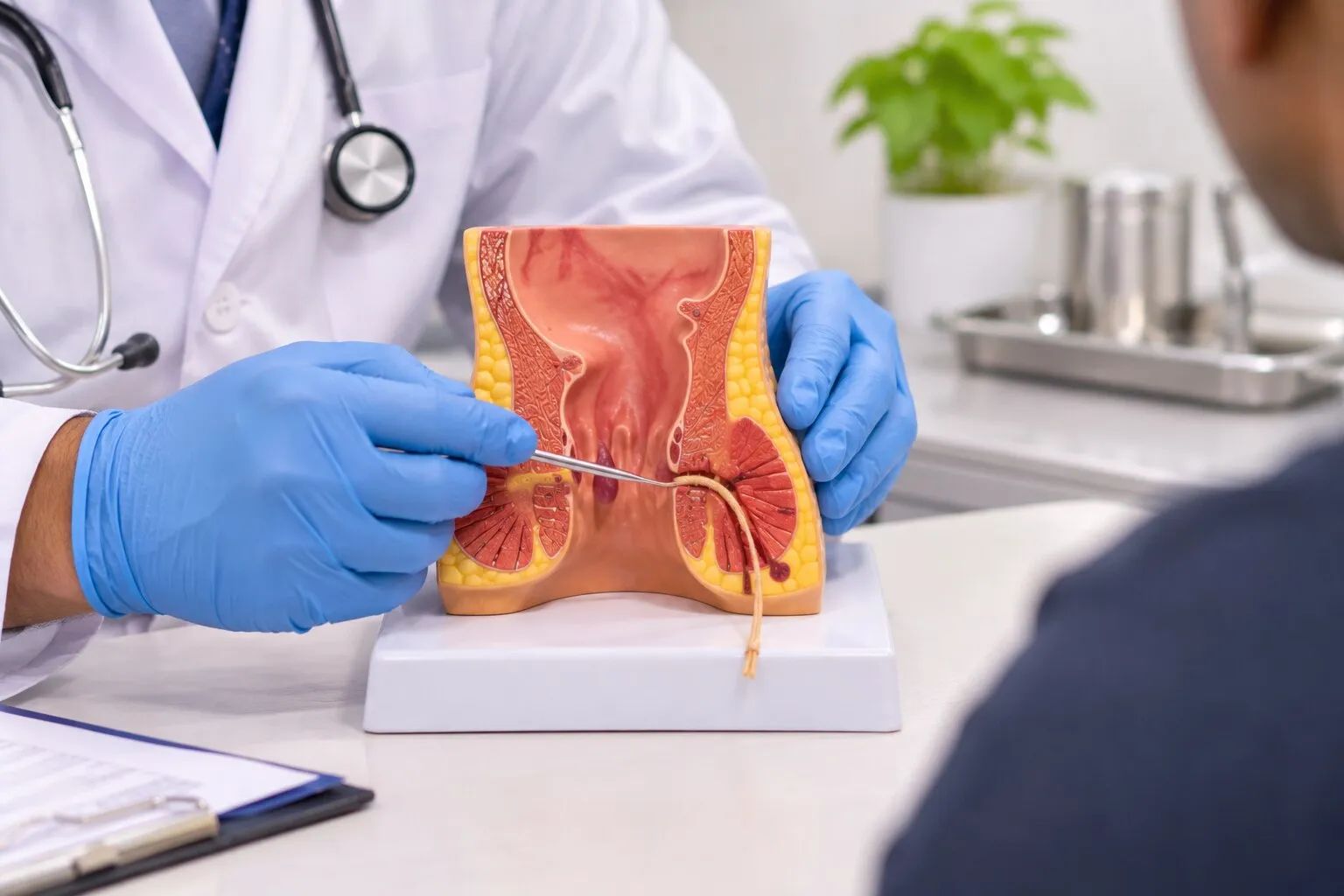
An anal fistula is an abnormal tunnel between the anal canal or rectum and the skin. It usually has an internal opening inside the anus, a fistula tract through tissue, and an external skin opening that leaks pus or blood.
The visible opening does not show the tract’s full length, branches, depth or relationship to the anal sphincter.
A clinician confirms whether the tunnel exists and whether it is treatable through a staged assessment:
- The clinician asks about drainage, pain, previous abscesses and recurrence, then inspects the external skin opening and performs a digital rectal examination. This can identify tenderness, a cord-like tract or an internal opening.
- Proctoscopy allows inspection of the anal canal for an internal opening, inflammation, fissure or another cause of discharge.
- If the opening is hidden, the tract is high, recurrent or branching, MRI fistulography or an MRI scan of the pelvis can map its route and sphincter involvement. Examination under anaesthesia helps when pain or swelling prevents a reliable examination.
- The clinician checks for an abscess, Crohn’s-related disease, hidradenitis, pilonidal disease and an anal fissure with a sentinel pile. An abscess usually needs drainage before definitive tract treatment.
The assessment must record how much sphincter muscle the tract crosses. Cutting more external sphincter increases leakage risk, so the clinician should explain why Kshara Sutra, fistulotomy or a sphincter-sparing option fits the anatomy. Antibiotics alone do not remove the tract.
Which Fistula Features Affect Kshara Sutra Suitability
A simple fistula with one identifiable tract and limited sphincter involvement is the clearest situation for considering Kshara Sutra. Gradual division may be preferred when cutting through the tract at once would raise the risk of impaired continence.
| Feature | Kshara Sutra may fit when | Another treatment may be safer when |
|---|---|---|
| Simple, low tract | The tract is well mapped and crosses little sphincter muscle | Fistulotomy can offer direct treatment for a suitable low tract |
| Branching tract | Each branch has been identified and the plan accounts for all extensions | Seton drainage, LIFT or an advancement flap may better protect function |
| High fistula | A specialist judges gradual treatment appropriate after mapping sphincter involvement | Sphincter-sparing treatment is needed because a large muscle segment is involved |
| Recurrent fistula | Previous operations have been reviewed and the remaining tract is clearly defined | Scar tissue, multiple openings or an uncertain internal opening makes further assessment essential |
An external opening does not reveal the full risk. A high or branching tract, an anterior fistula in a woman, or a recurrent fistula can hide extensions and involve more sphincter than expected; MRI or examination under anaesthesia may change the plan.
Active infection must be controlled before definitive tract treatment. Drainage is important for an abscess, while antibiotics address cellulitis or systemic infection; antibiotics alone do not usually remove the fistula.
Crohn’s disease, multiple fistulas and poor wound healing require treatment of the underlying condition alongside local care. In these situations, Kshara Sutra is not an automatic choice, and a colorectal or anorectal specialist may favour drainage, a seton or another sphincter-sparing approach.
What Happens During Placement and Repeated Thread Changes
Placement begins after the tract has been identified and the openings prepared. A clinician passes the medicated seton from the internal opening through the fistula tract to the skin opening, then ties it as a loop. The thread carries Kshara material, commonly prepared with Apamarga and Snuhi latex.
The thread is not left unchanged until treatment ends. Its alkaline coating and gradual movement through the tract encourage drainage and divide the tunnel progressively, while tissue heals behind the advancing seton. This approach can limit a single, extensive cut through sphincter muscle, but it requires repeated visits and can make each change uncomfortable.
A change is often planned about once a week, but the interval is set by the examination findings:
- Tract length and the amount of thread that has passed through
- Ongoing drainage, swelling or trapped infection
- Wound healing behind the seton
- Pain, bleeding and the condition of nearby sphincter muscle
At each visit, the clinician removes or loosens the old thread, reassesses the tract and places a fresh one when needed. Final removal is appropriate only after the tract has been divided and is healing without a remaining cavity or active internal opening.
Skin closure alone is not proof of cure; increasing pain, fever or a new lump needs prompt reassessment.
What Daily Life and Wound Care Are Like During Treatment
Expect pain after placement, a small amount of bleeding, and fistula discharge around the thread. Discomfort often increases during a thread change, so ask which pain medicine is safe for you and when to take it; do not apply creams or insert medicines without approval.
Obtain written, personalised instructions for:
- Hygiene: whether to use warm-water baths, how to clean without pulling the thread, and how to dry the area.
- Dressing: which gauze to use, how often to change it, and what amount of discharge is expected.
- Bowel movements: how much fluid and fibre to take, whether a stool softener is appropriate, and what to do if straining or constipation occurs.
- Activity: when walking, sitting, exercise, driving and work are safe, and whether swimming or lifting needs restriction.
- Follow-up: the date for examination and the expected interval for each thread change, often about one week.
| Finding | What it may mean | Action |
|---|---|---|
| Mild soreness or drainage | Expected wound response | Follow the care plan and attend the scheduled review |
| Drainage stops but pain or a new lump develops | The skin opening may have closed while infection remains trapped | Contact the clinician promptly |
| Fever, rapidly worsening pain or swelling, heavy bleeding, inability to pass urine, or severe illness | Abscess or another complication | Seek urgent medical assessment rather than waiting for routine thread care |
Keep every thread-change appointment. The tract still needs assessment even when the skin appears closed.
How to Choose Fistula Care in Poonamallee
Before starting Kshara Sutra in Poonamallee, ask the provider to explain the expected treatment length, evidence for your fistula type and continence risk in plain numbers where reliable evidence exists. A gradual method is not automatically safer than fistulotomy if the thread crosses substantial sphincter muscle.
Ask these questions before consenting:
- Can you identify the internal opening and map the tract, and will you arrange MRI fistulography or examination under anaesthesia if the route is unclear?
- How many thread changes do you expect, how far apart, and what event confirms healing?
- Does the tract involve the external sphincter, and how will you monitor gas or stool leakage during follow-up?
- If you find a high, branching or recurrent tract, Crohn’s disease or an abscess, will you refer me to a colorectal surgeon?
Dr.Dhananjayas Hospitals can be included in your comparison only after you obtain these specific answers and a referral plan for complex anatomy.
| Option | Duration and follow-up | Evidence and continence risk |
|---|---|---|
| Kshara Sutra | Repeated changes over a planned healing period; ask for an expected range | Evidence is mainly observational studies, case series and small comparative trials; gradual division still carries continence risk |
| Fistulotomy | Often a single operation with wound healing afterward | Stronger established use for low tracts involving little sphincter; risk rises as more muscle is divided |
| Seton, LIFT or advancement flap | Staged care or one procedure, depending on anatomy | Sphincter-sparing options for complex tracts; healing and recurrence vary, so risks must be personalised |
Choose by anatomy, previous operations, Crohn’s disease and muscle involvement—not by whether a treatment is called traditional or modern.
Related service
Flstula Kshara Sutra FIstula Kshara sutra piles fistula fisher ( this is treditional based ayurvedic method) |
Frequently asked questions
How is an anal fistula confirmed before Kshara Sutra treatment?
A clinician examines the anal opening and skin, looks for the external opening and drainage, and assesses the internal opening and tract. Further evaluation is chosen when the tract is unclear, recurrent, branching or deep.
Which fistula features affect Kshara Sutra suitability?
The tract’s length, depth, branches, internal opening, relation to the anal sphincter, recurrence and associated abscess all affect suitability. A clinician must assess these features before recommending treatment.
What happens during Kshara Sutra placement and thread changes?
The thread is placed through the fistula tract after assessment. Follow-up visits allow the clinician to change the thread at planned intervals, monitor drainage and healing, and adjust care when needed.
What is daily life and wound care like during treatment?
Care usually focuses on keeping the area clean, managing drainage, preventing constipation and attending scheduled reviews. Seek prompt medical advice for fever, rapidly increasing pain, heavy bleeding or swelling.
How should you choose fistula care in Poonamallee?
Choose a service that examines the tract before treatment, explains alternatives and follow-up, provides wound-care instructions, and has a clear plan for handling abscesses, recurrence or complications.