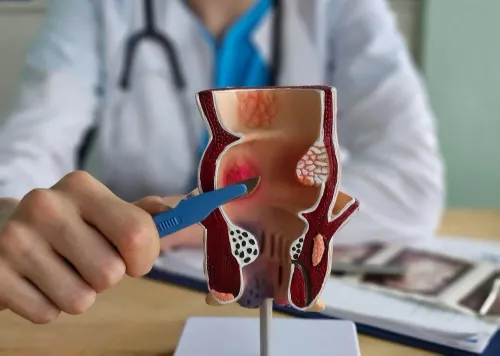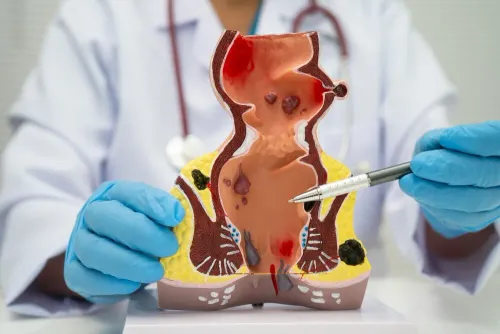
Bleeding or a lump near the anus does not tell you whether you have early piles, a prolapsing internal haemorrhoid or a thrombosed external haemorrhoid. A proper assessment identifies the grade, rules out more serious causes and matches treatment intensity to your symptoms, examination findings and response to initial care.
Key takeaways
- Grade describes prolapse, not pain severity.
- Seek examination for repeated bleeding, severe pain or a lump that will not go back.
- A doctor uses an examination to confirm the grade and rule out other causes.
- Treatment ranges from fibre and toilet changes to procedures for prolapse or clots.
How Grade I to Grade IV Piles Differ
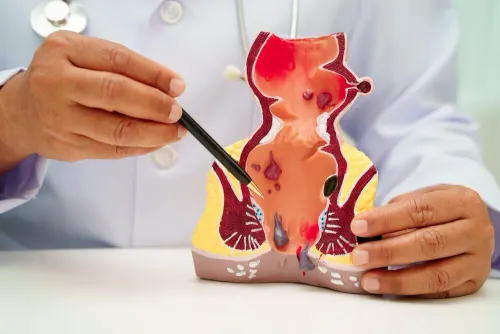
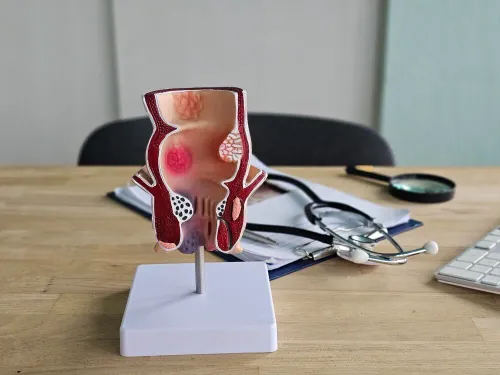
The four grades describe how far an internal haemorrhoid prolapses, not how much it hurts. Internal haemorrhoids arise inside the anal canal, while external haemorrhoids form under the skin around the anal opening.
| Grade | What it means | Typical clue |
|---|---|---|
| Grade I haemorrhoids | Do not prolapse | Bright-red bleeding without a lump coming out |
| Grade II haemorrhoids | Prolapse during straining but return by themselves | A lump appears during bowel movements, then retracts |
| Grade III haemorrhoids | Prolapse and need a finger to push them back | A lump remains outside until manually replaced |
| Grade IV haemorrhoids | Stay prolapsed and cannot be pushed back | Persistent external tissue, irritation or soiling |
The key difference in internal piles versus external piles is location and grading. External piles are not assigned grades I to IV; they may cause a tender lump, itching or bleeding, and a bluish, intensely painful lump can indicate a thrombosed external haemorrhoid.
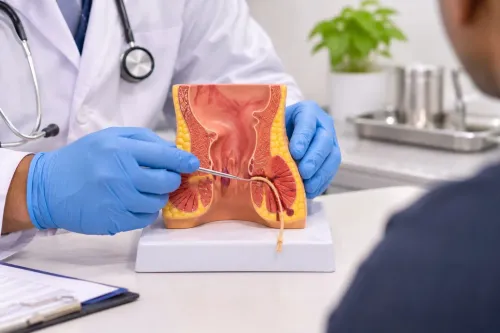
Bleeding, pain or a lump alone cannot identify the stage. A fissure often causes sharp pain during or after a bowel movement, while uncomplicated internal haemorrhoids more often cause painless bleeding or prolapse. A clinician confirms the cause by examining the anal area and, when needed, performing a digital rectal examination or anoscopy.
When Bleeding or Pain Needs a Proper Examination
Repeated bright-red rectal bleeding needs a routine examination, especially when it returns, mixes with stool, becomes heavier or has no clear trigger. Haemorrhoids can cause bright-red rectal bleeding, but polyps, inflammatory bowel disease and colorectal cancer can also bleed. Depending on your age, family history and other risks, a clinician may recommend colon evaluation.
| Finding | What it may indicate | What to do |
|---|---|---|
| Small, occasional bleeding without severe pain | Internal piles, but not piles by default | Arrange a routine assessment if it recurs |
| Sharp or burning pain during and after a bowel movement | Anal fissure versus piles | Book an examination rather than assuming haemorrhoids |
| Painful bluish lump at the anal margin | Thrombosed external haemorrhoid | Seek prompt assessment; early treatment suits selected recent cases |
| Constant severe pain, fever, spreading redness or pus | Abscess or another infection | Get urgent medical care |
| A prolapsed lump that cannot be pushed back | Trapped or advanced prolapse | Seek same-day assessment |
| Black stools, substantial bleeding, dizziness or weakness | Significant bleeding or bleeding higher in the digestive tract | Seek emergency care |
An examination also matters when swelling increases quickly, you cannot pass urine or pain prevents normal activity. A clinician can inspect the area and distinguish a fissure, abscess, fistula, thrombosed external haemorrhoid and internal piles; the symptom alone cannot establish the diagnosis.
How a Doctor Confirms the Grade and Cause
Your doctor confirms the grade and cause through a history, examination and targeted testing rather than bleeding alone. This piles diagnosis also separates haemorrhoids from an anal fissure, abscess, fistula or thrombosed external haemorrhoid.
During the consultation, expect:
- Questions about bleeding colour and frequency, straining, bowel habit, pain, itching, prolapse and whether a lump returns on its own.
- Inspection of the skin and anal opening for a fissure, clot, swelling, pus or prolapsed haemorrhoid.
- A digital rectal examination, in which a gloved, lubricated finger checks tenderness, masses, muscle tone and blood.
- Discussion of medicines such as warfarin, apixaban or aspirin, which affect bleeding risk.
Anoscopy uses a short, lubricated viewing tube to examine the anal canal and internal haemorrhoids directly. It helps confirm whether bleeding comes from piles and assess prolapse when inspection and the digital rectal examination do not explain the symptom.
A colon evaluation is needed for persistent, recurrent, heavy, unexplained or mixed-in-stool bleeding, altered bowel habits, anaemia, a family history of bowel cancer or inflammatory bowel disease. Rectal bleeding over 45 warrants discussion of colon evaluation even when piles are visible. Black stools, dizziness or substantial bleeding require urgent assessment.
Treatment Choices from Home Measures to Office Procedures
Grade I and mild grade II haemorrhoids usually start with conservative treatment for piles. Increase fibre and fluid intake, treat constipation or diarrhoea, avoid straining and prolonged toilet sitting, and do not remain on the toilet scrolling. These measures often reduce bleeding, but they will not reliably remove a large prolapsing lump.
1. Grade I: Continue dietary and bowel-habit changes while a clinician checks repeated bleeding. If bleeding persists, sclerotherapy or infrared coagulation can treat bleeding-predominant haemorrhoids.
2. Grade II: Use the same measures first. If prolapse or bleeding continues, rubber-band ligation is a common office option; the band is placed above the pain-sensitive dentate line, allowing the tissue to shrink and scar.
3. Selected grade III: Manual replacement of the prolapse signals that home care alone is unlikely to provide lasting control. Rubber-band ligation can suit selected cases, but substantial prolapse, external disease or recurrent symptoms may require surgery.
4. Grade IV: A prolapse that stays out and cannot be pushed back usually needs a procedural or surgical plan. Excisional haemorrhoidectomy is an established option, particularly for grade IV disease or mixed internal-external haemorrhoids, although recovery is more painful than after office treatment.
Move beyond conservative care when bleeding continues, prolapse interferes with cleaning or activity, or symptoms repeatedly return. Seek prompt review after banding for severe pain, fever or difficulty urinating. Anticoagulant use and the examination findings must shape the choice of procedure.
Choosing the Right Treatment for Prolapse, Clots and Recurrent Disease
A painful bluish lump may be a thrombosed external haemorrhoid, not a prolapsed internal pile. For a thrombosed external haemorrhoid, the 48 to 72 hours after severe pain begins can influence whether selected patients benefit from excision; others need analgesia, stool-softening measures and observation. Examination also rules out fissure, abscess and fistula.
| Option | What it means | When it fits |
|---|---|---|
| Office treatment | Sclerotherapy or infrared coagulation treats bleeding from small internal haemorrhoids | Bleeding-predominant, lower-grade disease without substantial prolapse |
| Haemorrhoidectomy | Removes haemorrhoidal tissue; recovery is usually more painful | Grade III or IV disease, mixed internal-external disease, or a large external component |
| Stapled haemorrhoidopexy | Lifts prolapsing internal tissue with less early pain than excision | Selected internal prolapse; less suitable for prominent external disease because recurrence is more likely |
| Kshara Sutra for fistula | A medicated thread is passed through a confirmed fistula tract and changed periodically | Fistula-in-ano after confirming the tract and internal opening, not for ordinary piles |
Dr.Dhananjayas Hospitals can help separate these diagnoses before recommending treatment, including reviewing anticoagulant use, symptom duration and examination findings. Ask why the proposed option matches your dominant problem, what happens if prolapse recurs, and whether imaging or conventional surgical planning is needed for a complex fistula.
A procedure chosen for bleeding alone will not correct substantial prolapse; Kshara Sutra for fistula will not treat haemorrhoids.
Related service
PILES PILES Hemorrhoids or Piles as is generally known is a very common disease. |
Frequently asked questions
How do Grade I to Grade IV piles differ?
Grade I piles do not prolapse. Grade II prolapse during straining but return on their own. Grade III need manual replacement. Grade IV remain prolapsed and cannot be pushed back.
When does bleeding or pain from piles need an examination?
Arrange an examination for repeated or heavy bleeding, severe pain, a persistent lump, black stools, dizziness or symptoms that do not improve with basic care.
How does a doctor confirm the grade and cause of piles?
The doctor reviews your symptoms, inspects the anal area and may perform a digital rectal examination and anoscopy. Further tests may be needed when bleeding has another possible cause.
What treatments are available for different stages of piles?
Treatment can include fibre, fluids, avoiding straining, medicines and toilet habit changes. Persistent prolapse, clots or recurrent disease may require an office procedure or surgery.