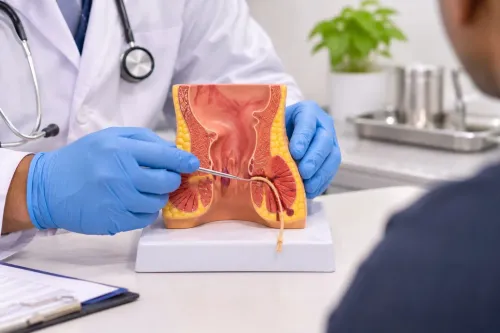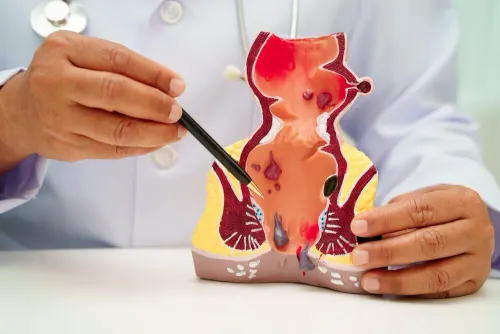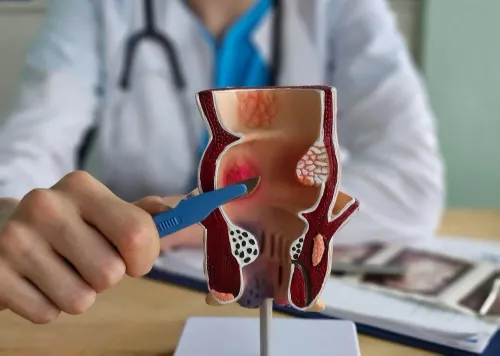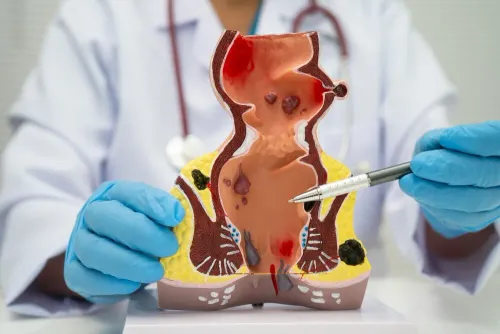
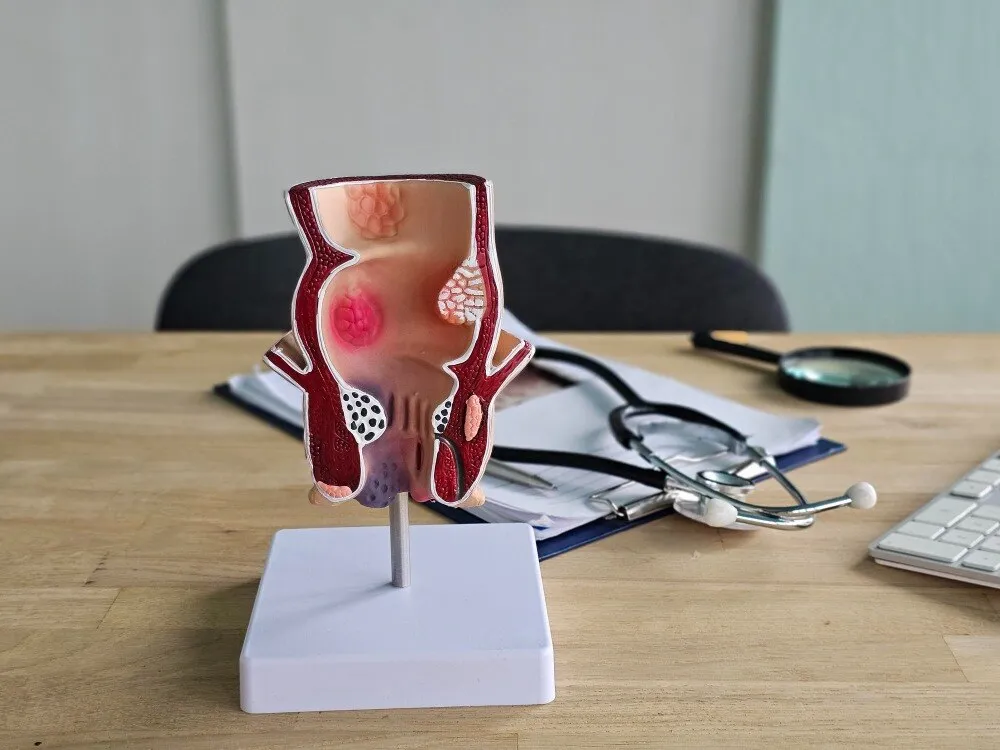
Rectal bleeding, pain or a lump needs a confirmed diagnosis before you compare hospitals or agree to a procedure. Use the checks below to distinguish routine piles care from conditions needing different treatment, assess a hospital’s clinical capability, and compare recovery, follow-up and safety rather than relying on labels such as “advanced” or “minimally invasive.”
Key takeaways
- Seek urgent care for heavy bleeding, faintness, fever or severe worsening pain.
- Confirm the examination includes history, inspection, digital rectal examination and anoscopy when needed.
- Compare doctors, equipment, infection-control practices and emergency arrangements.
- Ask for a written diagnosis, treatment options, risks, costs and follow-up schedule.
Confirm the condition and check whether you need urgent care
A credible piles diagnosis starts with history and examination, not a procedure recommendation. The clinician should ask about bleeding, pain, bowel changes, discharge, duration, age and family history, then inspect the area, perform a digital rectal examination and use anoscopy when appropriate.
This separates internal piles from external piles and considers fissure, fistula, abscess, rectal prolapse and bowel disease.
Seek urgent medical assessment rather than comparing routine appointments if you have:
- Heavy or persistent bleeding, black stools, dizziness or fainting
- Fever with constant anal pain, increasing swelling or pus
- Trouble passing urine, rapidly worsening pain or a lump that will not settle
A thrombosed external hemorrhoid, abscess, strangulated prolapsed hemorrhoid and fissure need different management. Rubber-band ligation treats selected internal piles, not a fissure, fistula or external thrombosis. Ask which anatomical problem the proposed treatment addresses and how its grade was determined; internal piles are graded I to IV according to prolapse and reducibility.
Persistent bleeding, altered bowel habits, unexplained weight loss, anemia, abdominal pain or a first-degree family history of colorectal cancer warrants discussion of blood tests, colonoscopy or other evaluation above the anus. Search results labelled fissure versus piles comparison Vadapalani hospitals are not enough; choose a hospital that explains what it has ruled out and why.
Know what a proper first appointment includes
A credible first piles consultation starts with a symptom history, medical history, bowel habits and family history before anyone recommends a procedure. The clinician should record bleeding, pain, prolapse, discharge, constipation, weight loss and changes in stool pattern.
1. Visual inspection checks for external piles, fissure, fistula openings, abscess, skin disease and rectal prolapse.
2. A digital rectal examination uses a gloved, lubricated finger to assess tenderness, masses, sphincter tone and other causes of bleeding.
3. Anoscopy views the anal canal with a short lighted instrument and helps identify internal hemorrhoids and their bleeding points. A proctoscopy for piles may examine farther into the rectum when symptoms or examination findings require it.
4. Blood tests, such as a complete blood count, are appropriate when bleeding could have caused anaemia. Ask about colonoscopy when bleeding persists, bowel habits change, you lose weight without explanation, have abdominal pain, or a first-degree relative had colorectal cancer. Imaging is considered for suspected fistula, abscess or disease beyond the anal canal.
The hospital should document the hemorrhoid grade and explain why its recommendation fits the findings. For uncomplicated disease, ask whether fibre, adequate fluids, avoiding straining and limiting toilet time come first; immediate surgery without discussing these measures and less-invasive options deserves caution.
Compare the hospital’s doctors, equipment and safety systems
Verify the piles surgeon qualifications, medical registration and experience with the condition being treated. A clinician who treats haemorrhoids should also recognise fissure, fistula, abscess, rectal prolapse and colorectal disease rather than label every bleeding symptom as piles.
| Area to compare | What to verify | Warning sign |
|---|---|---|
| Doctors | Named qualification, registration number and experience with the proposed procedure | Staff avoid identifying the treating practitioner |
| Examination | Anorectal examination facilities for inspection, digital rectal examination and anoscopy or proctoscopy | A procedure is recommended without examination |
| Diagnostics | Piles diagnostic equipment, blood-test access and referral for colonoscopy or imaging when symptoms require it | Persistent bleeding is attributed to piles without further assessment |
| Anaesthesia and safety | What anaesthesia support piles hospital provides, plus monitoring, sterilisation, resuscitation equipment and emergency transfer | “Minimally invasive” is used to excuse missing emergency arrangements |
| Follow-up | A named contact, review dates and a plan for bleeding, infection, discharge or non-healing wounds | Follow-up ends after payment or discharge |
Ask how the hospital handles altered bowel habits, weight loss, anaemia, abdominal pain or a first-degree family history of colorectal cancer. These findings can require evaluation beyond the anus.
Before consenting, request written details of expected pain, bleeding, infection, recurrence and continence risk, along with the total estimate. Prefer diagnosis-specific outcomes with a stated follow-up period over testimonials or “100% cure” claims.
Match the treatment to the grade, anatomy and recovery you can manage
Choose treatment by the confirmed anatomy, grade and recovery time you can manage—not by the hospital’s preferred procedure. For grade I, II, III and IV piles treatment, ask whether the problem is internal, external, prolapsing, thrombosed, or actually a fissure or fistula.
| Option | What it means | When it applies |
|---|---|---|
| Medicines and bowel care | Fibre, fluids, stool regulation, avoiding straining and prescribed topical treatment | First-line care for uncomplicated grade I and some grade II symptoms; inadequate if persistent prolapse remains |
| Rubber-band ligation | A band cuts blood flow to selected internal hemorrhoids; it is not treatment for external thrombosis, fissure or fistula | Grade I–II and selected reducible grade III disease; ask about pain, bleeding and recurrence |
| Surgery | Excision or another operation removes or corrects prolapsing tissue; discuss hemorrhoidectomy recovery, wound pain and time away from work | Large grade III, irreducible grade IV or mixed disease when less-invasive care is unsuitable; ask about stapled hemorrhoidopexy alternatives |
| Kshara Sutra | A medicated seton gradually treats a fistula tract, not ordinary piles | Only after a fistula is mapped; high, branching, recurrent or Crohn’s-related fistulas need specialist review and sometimes MRI or another operation |
Ask the surgeon to show which structure the treatment targets and what happens if symptoms return. A recommendation for surgery without documented conservative care or a comparison with office procedures deserves a second opinion.
If the diagnosis is a chronic fissure, ask about stool regulation, sphincter-relaxing medicines, botulinum toxin and the continence risks of sphincter surgery. Select a hospital that can provide appropriate anaesthesia, manage complications and arrange follow-up rather than simply offering a procedure.
Ask for a written plan and test the hospital’s claims
Get a written plan before you pay or consent. Your questions to ask piles hospital staff should cover the diagnosis, proposed procedure, treating practitioner’s qualification and registration, anaesthesia, total estimated cost, recovery time, and risks including bleeding, infection, recurrence and continence problems.
- Who will review persistent bleeding, pus, fever, worsening pain or discharge?
- What number handles wound problems outside clinic hours?
- When will a non-healing fistula be re-examined, imaged with MRI or referred to a colorectal surgeon?
- How will you record recurrence, and who pays for review or further treatment?
| Claim | Evidence to request | Warning sign |
|---|---|---|
| Minimally invasive piles claims | The exact anatomical problem treated, eligibility by haemorrhoid grade, complication rates and follow-up period | The same procedure is offered for piles, fissure and fistula without examination |
| Kshara Sutra fistula treatment Chennai | Expected thread-change frequency, total treatment duration, pain control, wound care and the clinic’s definition of healing | It is presented as a one-day cure |
| “100% cure” | Diagnosis-specific outcomes with a stated follow-up period | Testimonials replace audited outcomes or recurrence figures |
For invasive treatment, insist on written consent and a cost estimate, plus evidence of sterilisation, emergency resuscitation equipment and a referral pathway. Rubber-band ligation does not treat every anal lump, and Kshara Sutra evidence is not automatically transferable to high, branching, recurrent or Crohn’s-related fistulas.
Dr.Dhananjayas Hospitals should answer these same questions clearly rather than relying on its treatment labels.
Related service
PILES PILES Hemorrhoids or Piles as is generally known is a very common disease. |
Frequently asked questions
When should piles symptoms receive urgent medical care?
Seek urgent care for heavy or persistent bleeding, faintness, severe worsening pain, fever, or symptoms that suggest another serious condition.
What should a first piles appointment include?
The clinician should review bleeding, pain, bowel changes, discharge, duration, age and family history, then inspect the area and perform a digital rectal examination. Anoscopy may be appropriate.
How can you compare piles hospitals in Vadapalani?
Ask about the treating doctors’ qualifications and experience, examination equipment, infection-control procedures, emergency support and follow-up arrangements.
How should treatment be matched to your piles?
Treatment should reflect the confirmed diagnosis, haemorrhoid grade, anatomy, symptoms, previous treatment and the recovery time you can manage.
What should a hospital include in a written piles treatment plan?
Request the diagnosis, proposed treatment, alternatives, preparation, risks, expected recovery, costs, medicines, warning signs and follow-up schedule in writing.