Sharp pain during a bowel movement followed by burning, a streak of bright-red blood, or a tight anal muscle can point to an anal fissure, but these signs overlap with piles and more urgent conditions. By the end, you will know which symptoms fit a fissure, when to seek prompt care, what an examination involves, and how treatment choices in Koyambedu are usually assessed.
Key takeaways
- Sharp pain during and after bowel movements strongly suggests an anal fissure.
- Bright-red blood on toilet paper can occur with fissures and piles.
- Fever, swelling or pus needs prompt assessment for an abscess or fistula.
- Increase fibre and fluids, and seek care if pain or bleeding persists.
Which symptoms most strongly suggest an anal fissure?
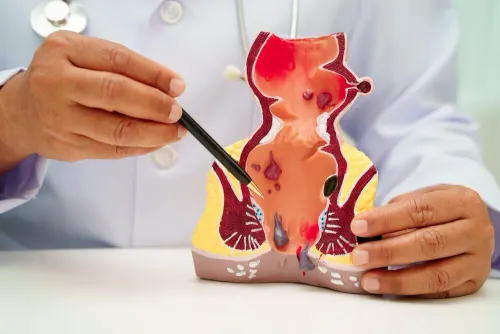
The classic anal fissure symptoms are sharp pain during bowel movement followed by burning after bowel movement. The pain can feel cutting or tearing and continue for minutes or hours because the internal anal muscle spasms. You may also notice tenderness, itching, and a small amount of bright-red blood on toilet paper or stool surface.
| Finding | What it suggests | What to notice |
|---|---|---|
| Sharp or tearing pain | A fissure in the anal lining | Starts as stool passes |
| Burning pain | Ongoing sphincter irritation | Lasts minutes or hours afterward |
| Bright-red bleeding | Surface bleeding near the anus | Small streak on paper or outside the stool |
| Spasm and tenderness | Tightening of the anal muscle | Pain can continue after the bowel movement |
| Sentinel skin tag | Long-standing or chronic fissure | A small skin flap beside the opening |
Symptoms often begin after a hard or bulky stool, constipation, straining, diarrhoea, childbirth, or anal trauma. Inflammatory bowel disease, especially Crohn’s disease, can also contribute.
Symptoms that last or recur beyond roughly six weeks suggest a chronic fissure. Arrange a fuller assessment instead of repeatedly self-treating, particularly if the fissure is painless, appears on the side rather than the usual back midline, or there is more than one lesion.
How can you tell a fissure from piles, fistula or an abscess?
A fissure usually causes sharp or tearing pain during a bowel movement, followed by burning that lasts minutes or hours. A tender lump points more towards a thrombosed hemorrhoid, while constant or throbbing pain, pus and anal swelling suggest an abscess or fistula rather than routine fissure pain.
| Condition | Typical clues | What it suggests |
|---|---|---|
| Fissure | Pain linked to passing stool, with possible bright-red blood | A tear, but bleeding alone does not prove it |
| Piles | Tender, suddenly painful lump | Possibly a thrombosed hemorrhoid |
| Perianal abscess | Constant pain, fever, persistent swelling, pus | Infection needing prompt assessment |
| Fistula | A continuously draining opening, recurrent swelling or pus | An abnormal tract, often after an abscess |
Bleeding without fissure-type pain does not establish the diagnosis. An abscess generally needs drainage; fissure ointment alone will not remove the collection of infection.
Seek urgent care for:
- Heavy bleeding or dizziness
- Fever, feeling systemically unwell, or spreading redness
- Severe swelling or rapidly worsening pain
- Inability to pass stool or urine
Arrange assessment for persistent or recurrent bleeding, a non-healing opening, or symptoms that do not fit one pattern. Do not accept Kshara Sutra for a supposed fissure without asking what examination finding proves a fistula tract; it is mainly a medicated thread or seton technique for fistula treatment.
What happens during an examination for anal pain or bleeding?
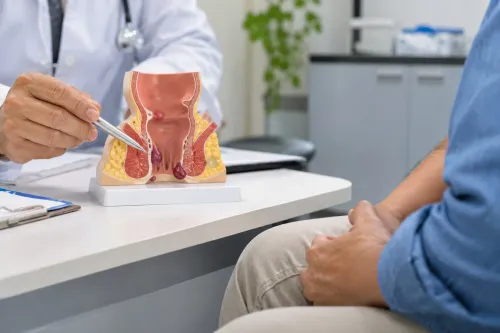
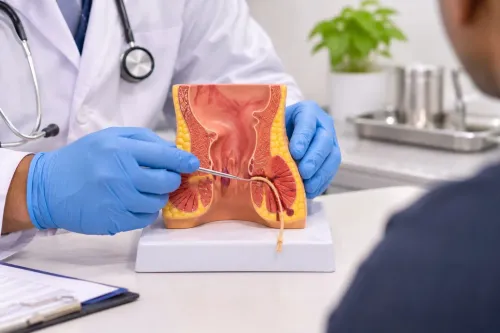
Anal fissure diagnosis begins with history and gentle inspection, not automatically with an internal examination. The clinician first decides whether the pattern fits a straightforward fissure or needs investigation for another cause.
1. Expect questions about when pain starts, how long it lasts, bleeding amount and colour, stool consistency, constipation, diarrhoea, straining, childbirth, inflammatory bowel disease, weight loss, altered bowel habit, anaemia and family history of bowel or anal disease.
2. The clinician gently inspects the anal opening, noting whether the fissure is in the usual posterior midline or in a lateral position. A chronic fissure may show a sentinel skin tag, hypertrophied anal papilla or exposed internal sphincter fibres.
3. Severe pain can make a digital rectal examination or anoscopy too distressing and unreliable initially, so the clinician may defer them. Anoscopy can follow when pain settles or when bleeding, an internal lesion or another anorectal problem needs checking.
4. Blood tests can assess anaemia or inflammation, while stool tests can investigate infection or intestinal inflammation. Colon evaluation is considered for persistent bleeding, altered bowel habit, weight loss, anaemia, older age or relevant family history. Examination under anaesthesia may be needed when the diagnosis remains uncertain or inspection is intolerable.
5. A lateral or multiple fissure, painless or non-healing lesion, persistent bleeding or unexplained weight loss indicates an atypical anal fissure requiring evaluation for Crohn’s disease, infection, immune deficiency, malignancy or another cause.
What can you do first, and which treatments may follow?
Start by making stools soft and easy to pass. Drink adequate fluids, increase fibre gradually, or use a clinician-approved fibre supplement. Avoid straining and prolonged toilet sitting. A warm sitz bath can ease discomfort and sphincter spasm, but it will not fix repeated hard stools.
Ask a clinician or pharmacist for a stool softener for anal fissure plan instead of repeatedly starting laxatives or pain medicines yourself.
| Option | What it does | When it applies |
|---|---|---|
| Glyceryl trinitrate fissure ointment | Relaxes the internal sphincter; headaches are common | Prescribed topical fissure treatment |
| Diltiazem or nifedipine ointment | Relaxes the sphincter with fewer adverse effects | Alternative topical treatment |
| Botulinum toxin injection | Temporarily relaxes the sphincter | A fissure that does not heal with basic or topical care |
| Lateral internal sphincterotomy | Divides part of the internal sphincter and heals selected chronic fissures most reliably | Persistent disease after assessment; continence risk must be discussed |
Surgery requires review of previous childbirth injury, existing leakage, inflammatory bowel disease and anal operations because sphincterotomy can cause new or worsened gas or stool incontinence. Botulinum toxin avoids permanent division, but recurrence or repeat treatment can occur.
Kshara Sutra is mainly a medicated thread or seton technique for fistula tracts, not usual fissure treatment. Before accepting it for a “fissure,” ask what examination finding proves a fistula and what evidence supports that recommendation.
How should you choose fissure care in Koyambedu?
Choose fissure treatment in Koyambedu from documented examination findings, not from a symptom label, locality or treatment name. Select a clinic or hospital that confirms whether the fissure is acute or chronic, checks for abscess or fistula, and records your continence history before suggesting surgery.
| Option | What it means | When it applies |
|---|---|---|
| Conservative care | Stool-softening, fibre, fluids and bowel-habit changes | Initial care for many acute fissures |
| Topical treatment | Medicines that relax the internal sphincter | Persistent symptoms or a non-healing fissure |
| Procedure | Botulinum toxin or sphincterotomy | Selected chronic fissure treatment options after assessment |
Ask the anal fissure doctor in Koyambedu these questions:
- What is the proposed diagnosis, and what did inspection show?
- What is each medicine for, how should it be used, and for how long?
- What is the plan if symptoms continue beyond six weeks?
- Which warning signs require urgent review?
- If Kshara Sutra is recommended, what finding proves a fistula tract rather than a straightforward fissure?
Dr.Dhananjayas Hospitals can be considered when you want specialist anorectal care that compares conservative, topical and procedural choices. Seek urgent review for heavy bleeding, dizziness, fever, spreading redness, severe swelling, inability to pass stool or urine, or rapidly worsening pain.
Related service
FISSURE FISSURE What Is An Anal Fissure?  This is a very common Ano rectal disease causing a lot of suffering to the patient. |
Frequently asked questions
Which symptoms most strongly suggest an anal fissure?
Cutting or tearing pain during bowel movements, burning that continues afterward, and a small amount of bright-red blood strongly suggest an anal fissure.
How can you tell a fissure from piles, fistula or an abscess?
A fissure usually causes sharp pain with bowel movements. Piles more often cause bleeding, itching or a lump; a fistula can cause recurring discharge; an abscess causes severe constant pain, swelling and fever.
What happens during an examination for anal pain or bleeding?
A clinician reviews your symptoms and bowel habits, inspects the area gently, and decides whether a digital examination or anoscopy is safe and necessary.
What can you do first for an anal fissure?
Keep stools soft with fibre, adequate fluids and avoidance of straining. Seek medical care when pain persists, bleeding recurs or symptoms suggest infection.
How should you choose fissure care in Koyambedu?
Choose a clinic that explains the diagnosis, offers appropriate medical and procedural options, and provides follow-up for healing, constipation and recurrence.